Automotive · Jul 2025
Tacoma Solid-Axle Swap: Full Scan, CAD Design and Build
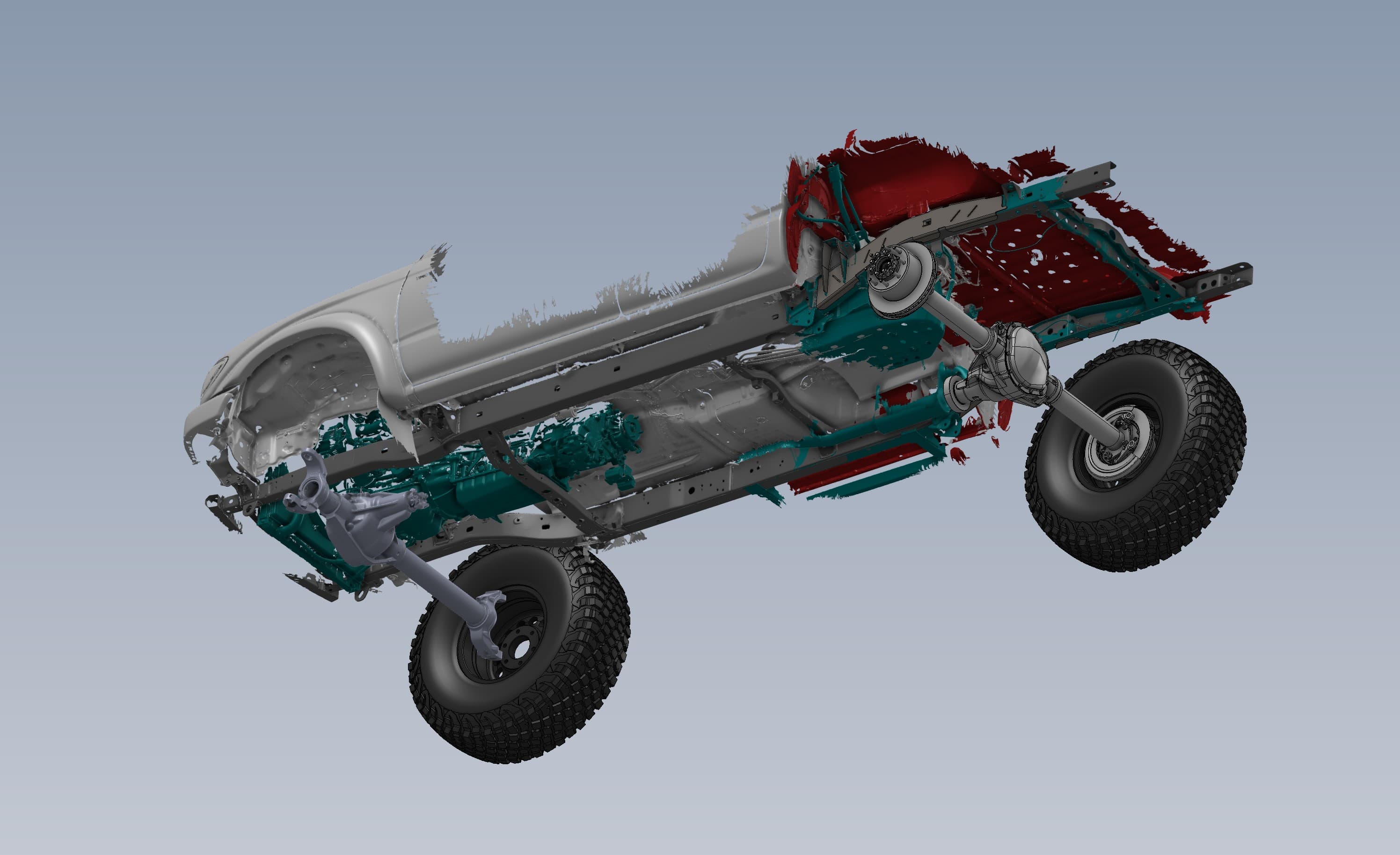
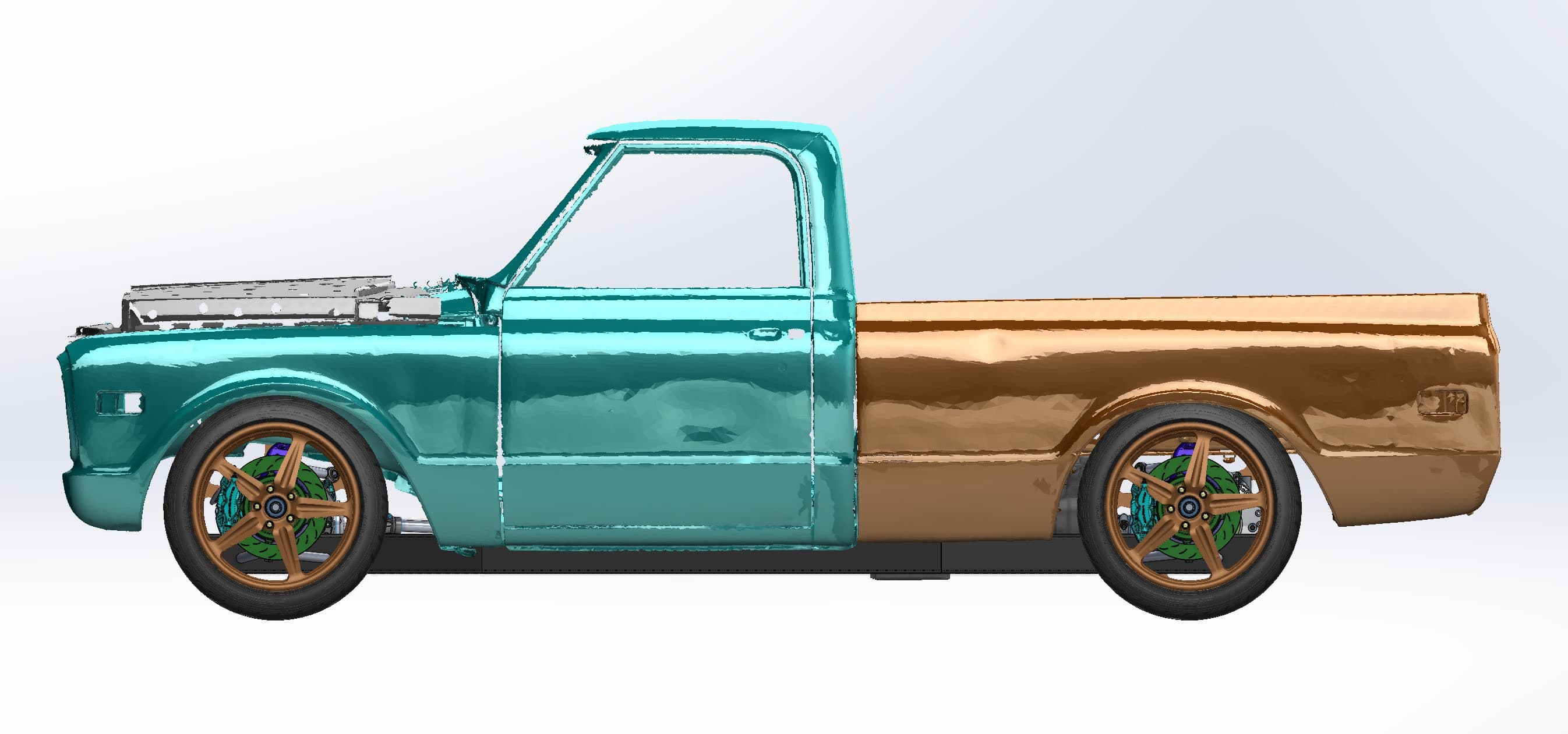
A 1st-gen Tacoma was 3D scanned from frame to floorpan, then a front solid axle and rear 4-link were designed on the scan and the rear 4-link was built.
3D Laser Scanning
What you get
A scan records curved panels, mounting points, hole patterns and hard-to-reach surfaces in one dataset. Your design starts from the part as it really is, not from a page of hand measurements.
Blue laser is our choice for vehicles, frames, large parts and difficult surfaces. Structured white light is quick on smaller parts with fine detail. We choose per job based on size, finish and the detail you need.
Before delivery we merge the scan passes, remove noise and stray geometry, fill small gaps and align the model to a useful coordinate system, such as a vehicle centerline or a mounting face.
Drop the part off in Reno (same-day scanning can be arranged), ship it to us, or book an on-site visit for anything that can't travel.
See the detail
Loading 3D scan…
Drag or use the arrow keys to rotate, scroll or pinch to zoom. The buttons do the same.
Process
Tell us the rough size, send a few photos and say what the scan is for. A design reference, a reverse-engineering job and an inspection each need different coverage and resolution. The instant estimate gives you a starting number.
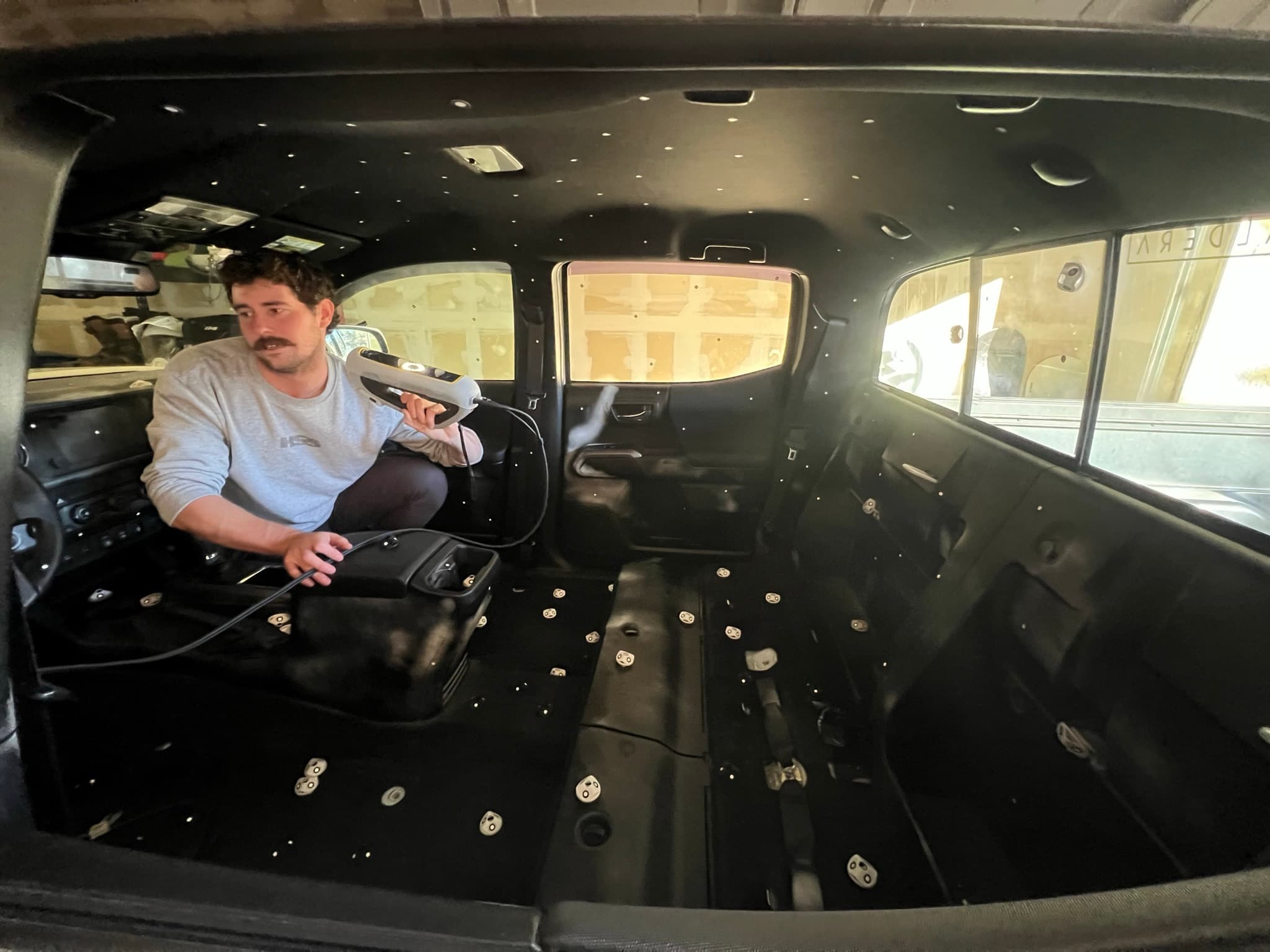
We place positioning targets so the scanner always knows where it is, and mist shiny, dark or clear areas with a sublimating scanning spray. The spray disappears on its own and the targets peel off afterward.
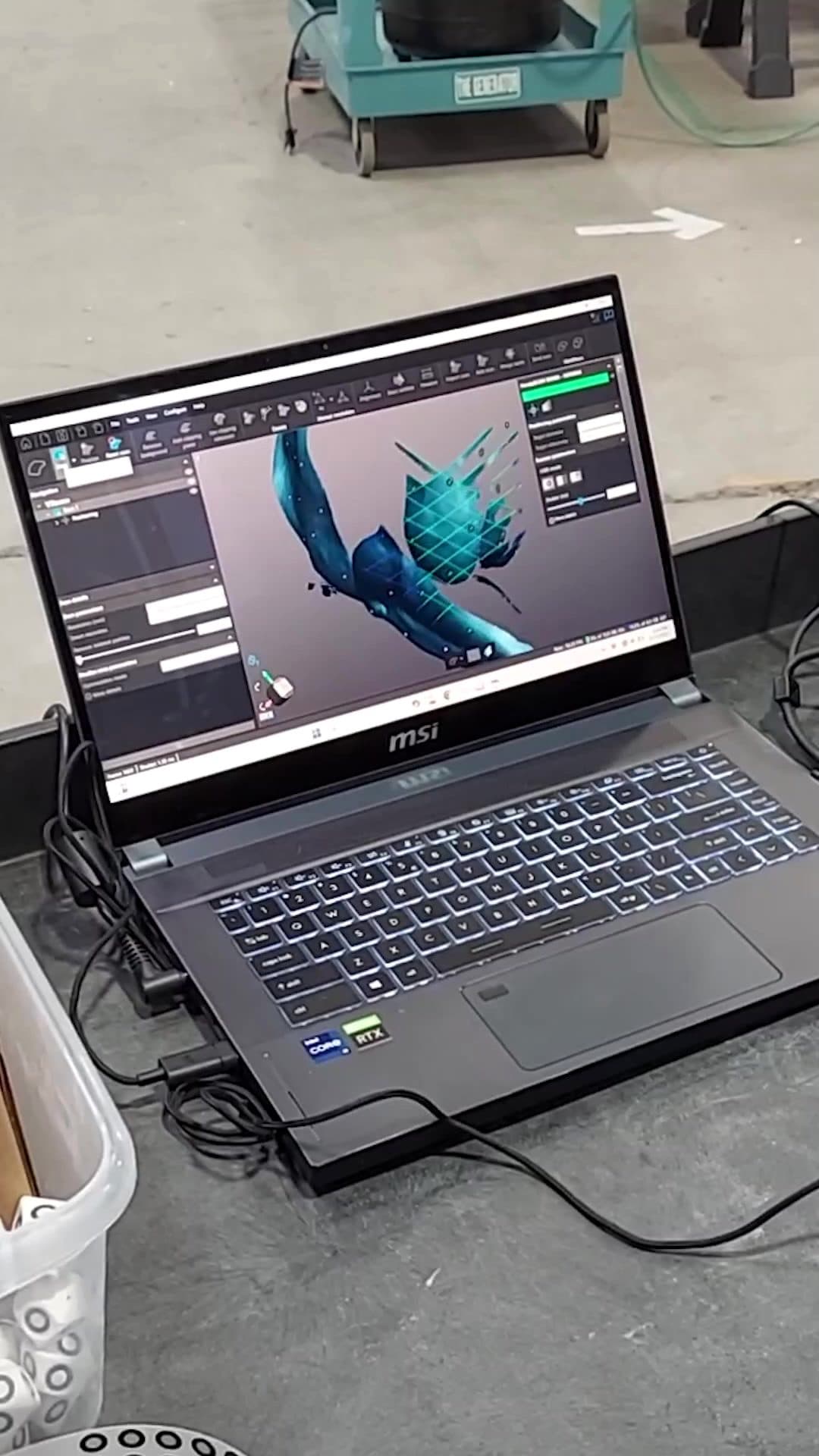
Handheld passes cover every face the job needs. The mesh builds live on the laptop, so gaps get filled while the part is still in front of us.
Passes are merged, cleaned and reduced to a workable file size without rounding off edges or holes, then aligned to a coordinate system that suits your next step.
You get a download link to the finished mesh. If you need editable CAD or a comparison against a model, the same scan feeds our scan-to-CAD and inspection services.
Typical jobs
Scan a truck on the lift, a stripped cab or a bare frame, then design chassis, suspension, cages and bumpers around the real geometry.
Brackets, knuckles, housings, pedals and shift knobs. A small, simple part can take about half an hour to scan, which keeps Reno drop-off jobs quick.
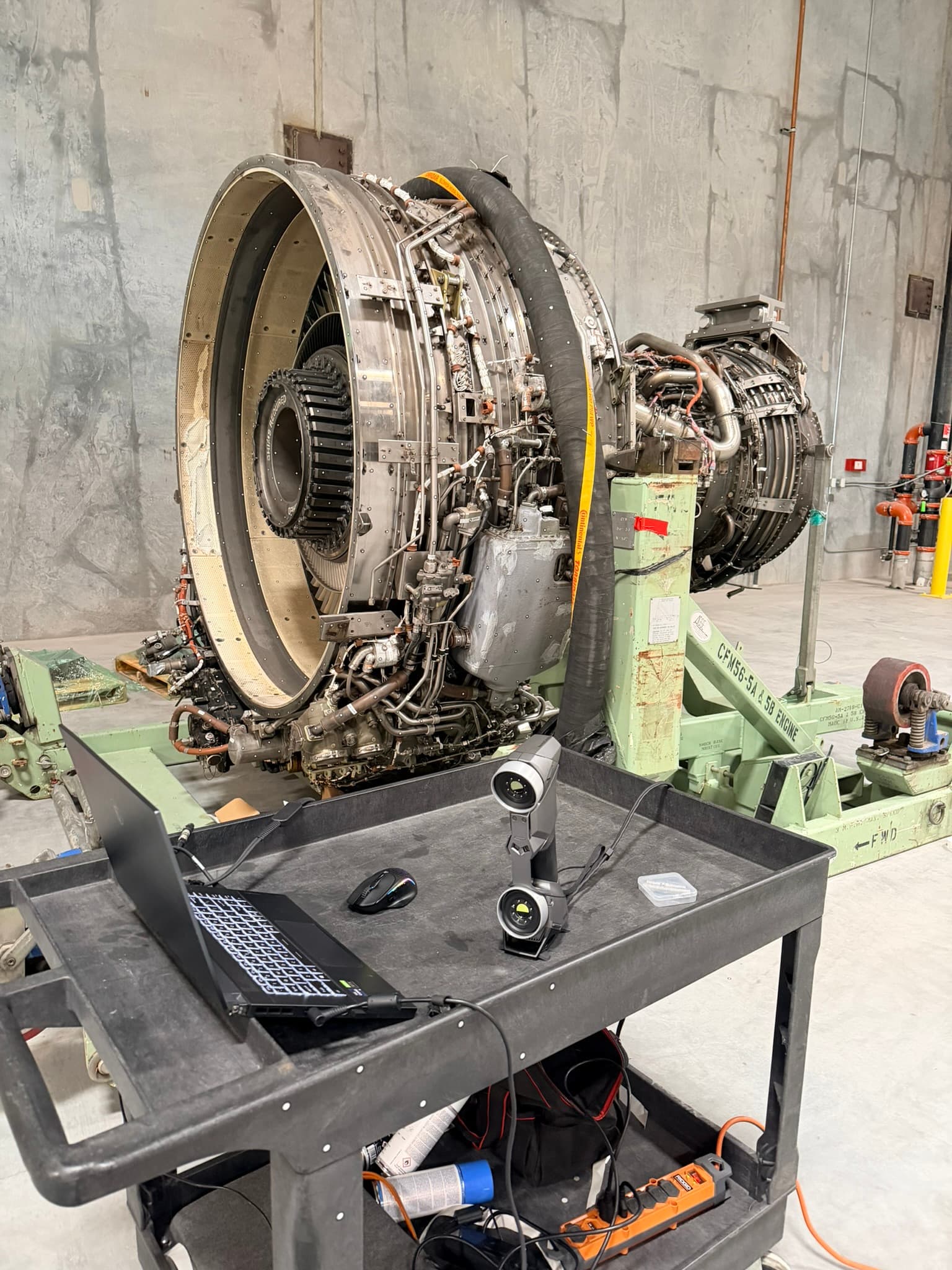
Cockpits, instrument panels, fairings and engines scanned where they sit, giving your engineers a reference for retrofits, tooling and documentation.
A stripped cab or cockpit covered in targets becomes a full interior model for dashboards, consoles, seat mounts and roll cages.
A large metal horse sculpture and a bus undercarriage scanned from a creeper both came out as complete meshes. If you can walk around it or crawl under it, we can usually scan it.
Capture a hand-built or irreplaceable part before it's modified, damaged or sold, so you can remake it later.
Proof
Automotive · Jul 2025
A 1st-gen Tacoma was 3D scanned from frame to floorpan, then a front solid axle and rear 4-link were designed on the scan and the rear 4-link was built.
Industrial · Feb 2025
A life-size metal horse sculpture captured with a handheld blue-laser scanner and positioning targets, then processed into a complete 3D mesh.
Aerospace · Jul 2026
On-site 3D scanning of a CFM56-series turbofan on its transport stand, capturing the engine's geometry for an aviation customer's engineering team.
FAQ
It depends on the size of the part, how complex its surfaces are and what you need delivered. Use the instant estimate for a starting number, or send photos and request a quote.
Our scanners are specified for accuracy up to 0.03 mm (0.0012 in). Real results depend on part size, surface finish and setup, so we'll tell you what to expect for your part before we scan.
Yes. We've scanned complete trucks, cabs, frames and underbodies. You can also scan just the area you're changing, like a front end or bed, which takes less time.
As a guide: about 30 minutes for a small simple part, about an hour for something like a helmet or steering rack, 2 to 3 hours for complex surfaces, 4 to 6 hours for a medium-to-large complex object, and 8 to 12 hours for a complete vehicle inside and out. Processing and any CAD work come after.
Yes. We apply a light coat of sublimating scanning spray so the scanner can see the surface, and it disappears on its own after the scan.
No. You can drop it off at our Reno shop, ship it to us, or have us come to you anywhere in the US. Things that can't move, like aircraft and installed machinery, are scanned on site.
Guides
Guides · 6 min read
What drives 3D scanning cost: size, surface finish, deliverable, location and quantity. See typical scan times, ways to lower your price and get an estimate.
Technology · 5 min read
Blue laser vs. structured light 3D scanners: how each captures data, where each works best, what accuracy and resolution specs mean, and how we pick per job.
Guides · 5 min read
How to prepare for 3D scanning: clean the part, clear loose items, flag critical features, plan for targets and spray, and prep vehicles, sites and shipments.
More services
Start a project
Tell us the size, complexity and what you need back. The instant estimate gives you a budget range now. Then we review the details and send a firm quote.