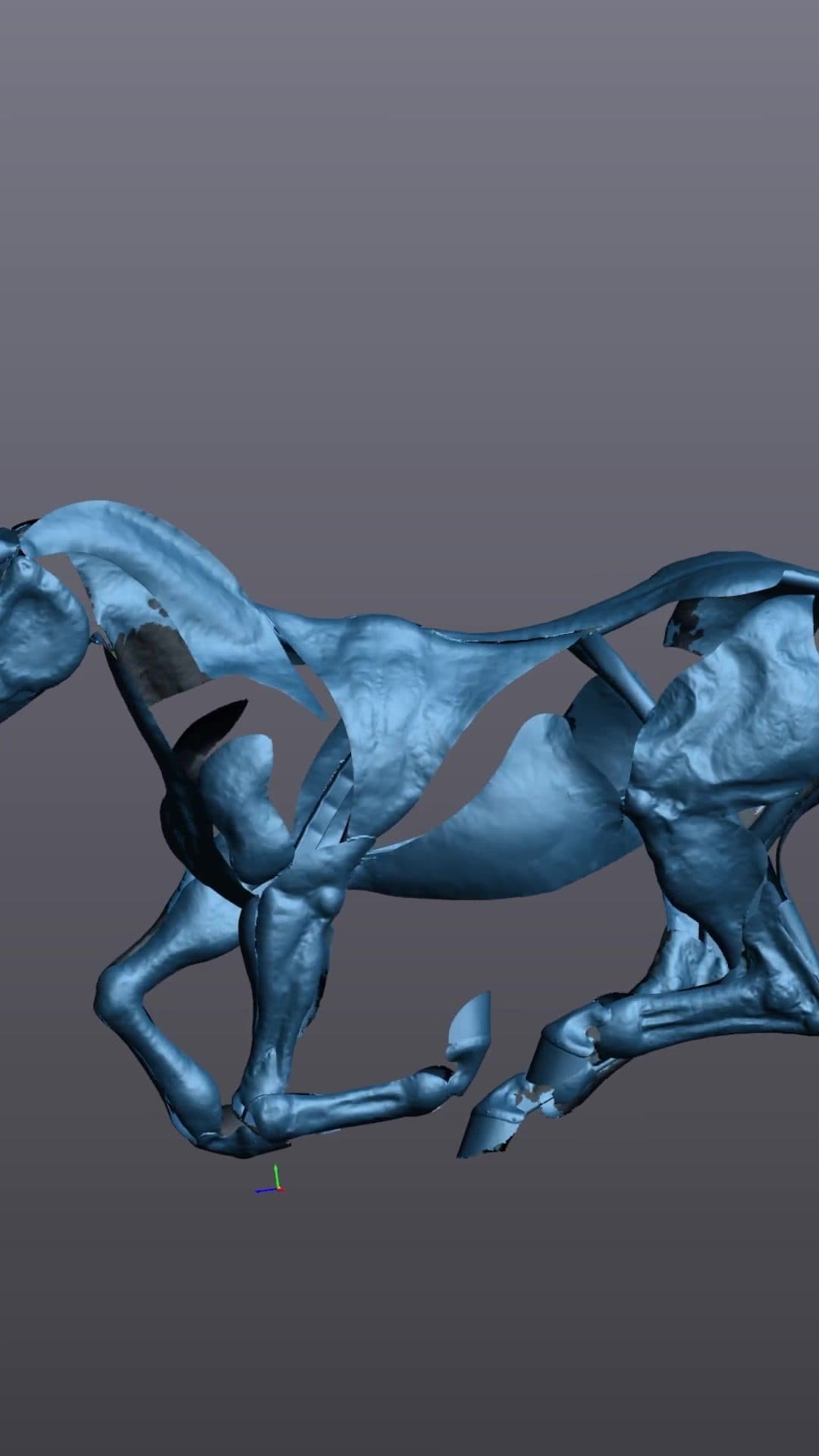
Most of what we scan has a VIN or a part number. This one had a mane. It's a life-size metal horse sculpture: a stylized, galloping figure with flowing cut-out mane panels, mounted on a steel base in a workshop. We captured it with a handheld blue-laser scanner and reflective positioning targets, and turned it into a complete 3D mesh. This large sculpture 3D scan shows how far a workflow built for trucks and race cars can stretch.
Why sculptures are harder than they look
A car body has seams, edges and features a scanner can lock onto. A sculpture often doesn't. Long, smooth, organic surfaces give the scanner little shape to track, so it can lose its place. Thin cut-out panels like this horse's mane have two faces and sharp edges, and both sides need coverage. Legs, belly and the gaps between them create undercuts and shadowed areas that only show up from certain angles. And at life size, the piece is big enough that it takes many passes to cover.
How it was scanned
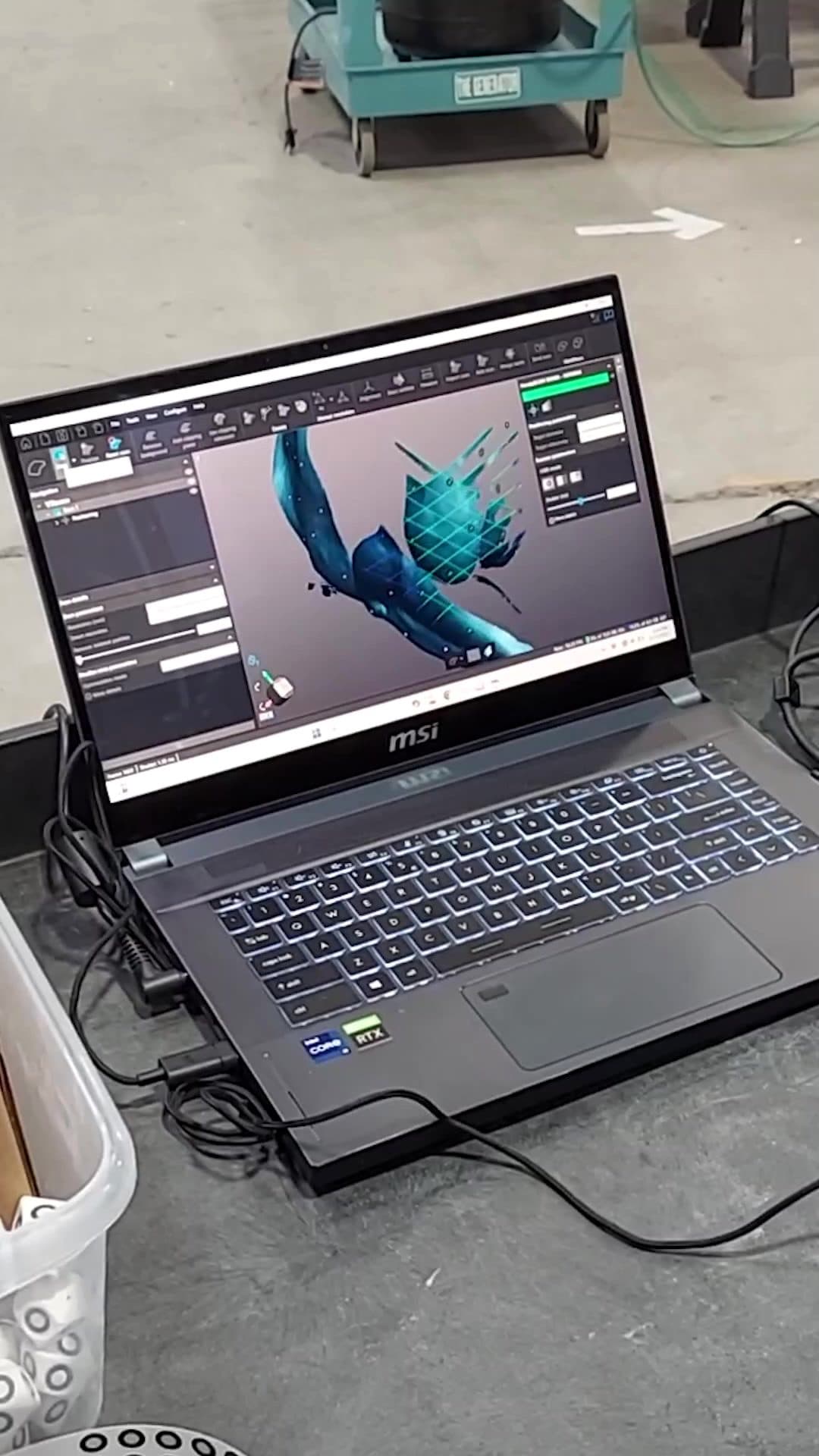
We dotted the sculpture with reflective positioning targets. The scanner tracks those targets to keep its position, which matters on a big, smooth form where the surface alone won't hold it. Then the handheld scanner swept over the horse, blue laser lines tracing across the metal, while the mesh built on the laptop in real time.
Watching the live mesh is how you scan a shape like this well. Thin spots and missed undercuts show up on screen while the scanner is still in hand, so they get filled during the session instead of discovered later.
The result: a complete 3D mesh
The finished mesh shows the whole horse: legs, body, head and the flowing mane panels. The video ends on orbits of the mesh and a close-up of the head, where you can see how much of the sculpted form carries through into the digital model.
A mesh like this is the base for whatever comes next. It exports to standard formats like STL, OBJ or PLY, and it can be scaled, sectioned or turned into CAD when a project needs it.
What a sculpture scan is good for
Artists, fabricators and collectors scan large pieces for a handful of practical reasons:
- Scaling. Make a smaller maquette or a larger version from the same geometry.
- Reproduction. Machine, print or mold a copy from the scan.
- Documentation. Keep an accurate record of a one-off piece's shape.
- Fabrication around the piece. Design bases, mounts, crates and installation hardware to fit the real form.
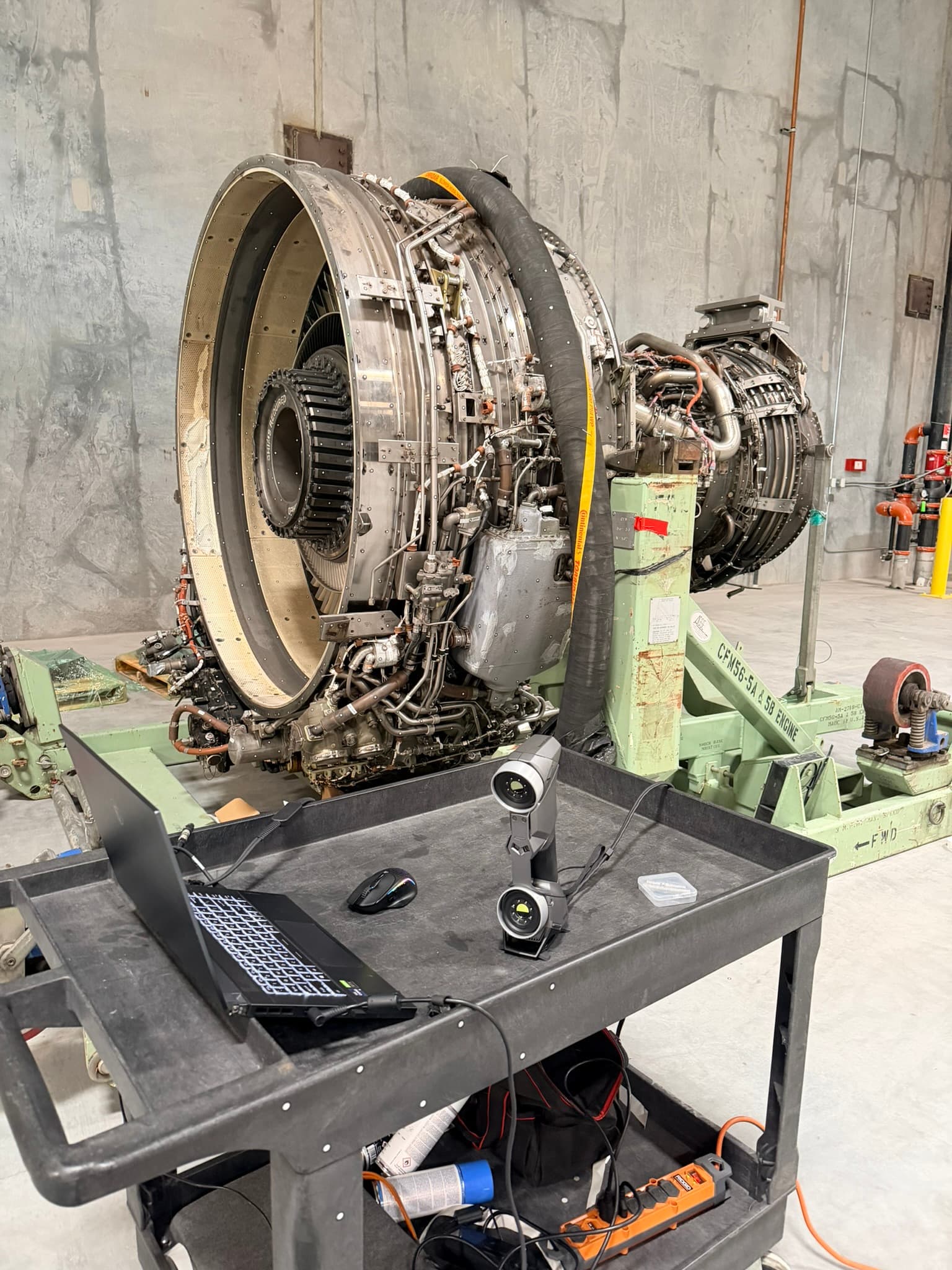
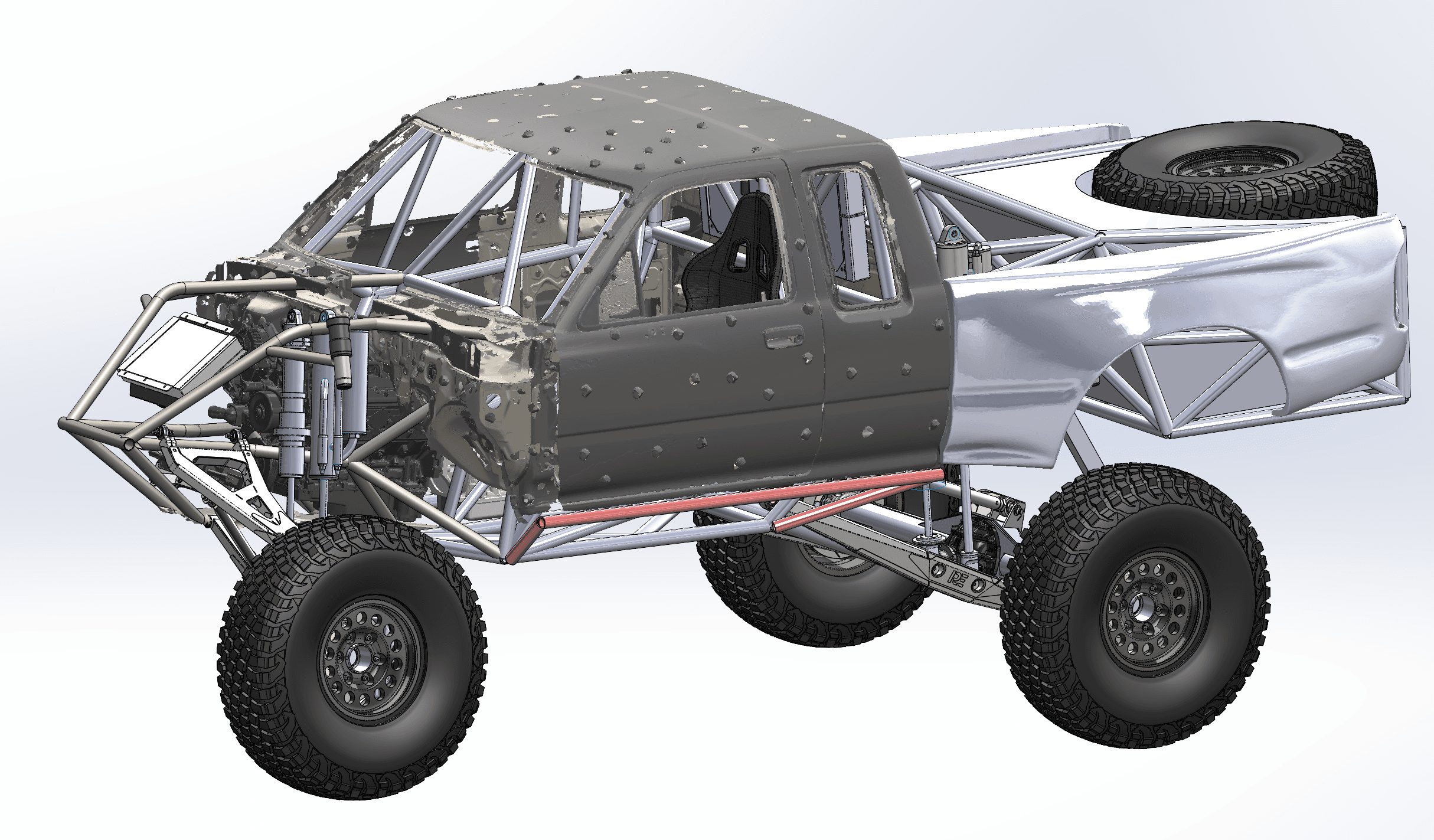
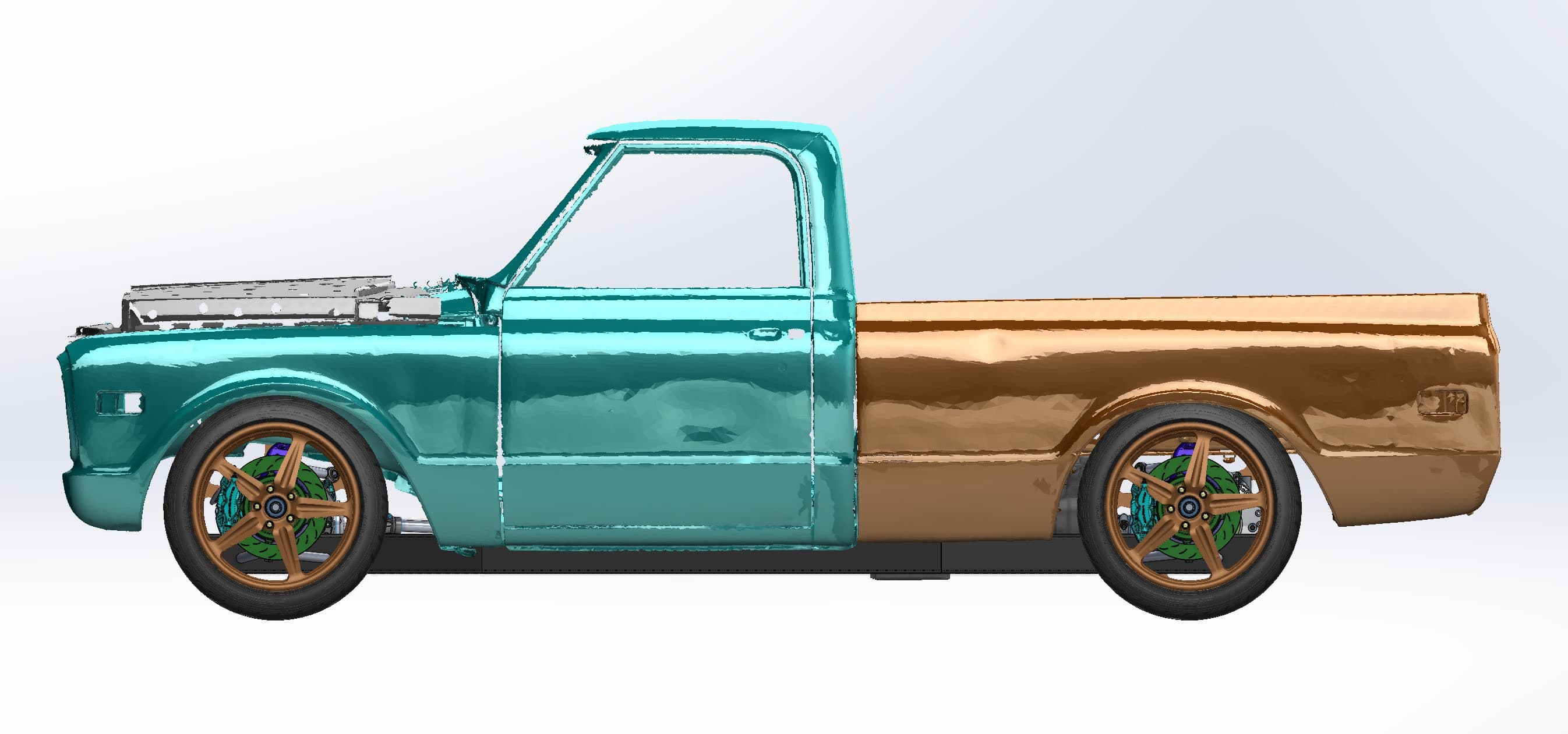
The same skills carry over to industrial work: castings, molded parts, tooling and anything else with freeform surfaces and no drawing. We've scanned everything from a shift knob to a full vehicle, including a jet engine, an aircraft cockpit and a bus undercarriage.
Learn more about our 3D laser scanning service, see industrial and fabrication scanning, or read how to prepare for 3D scanning before your piece goes under the scanner. To price a scan of your sculpture or part, get an instant estimate.