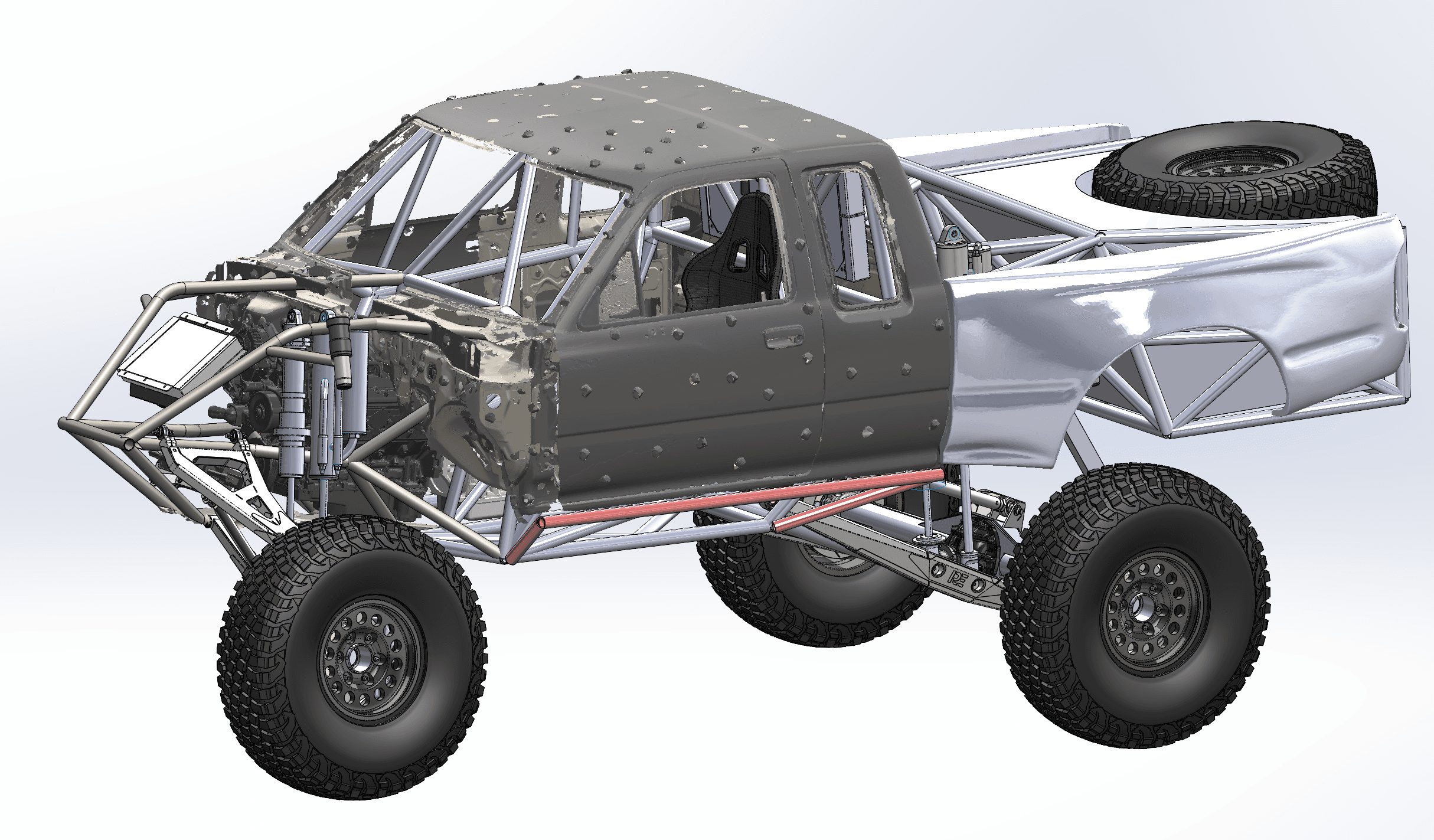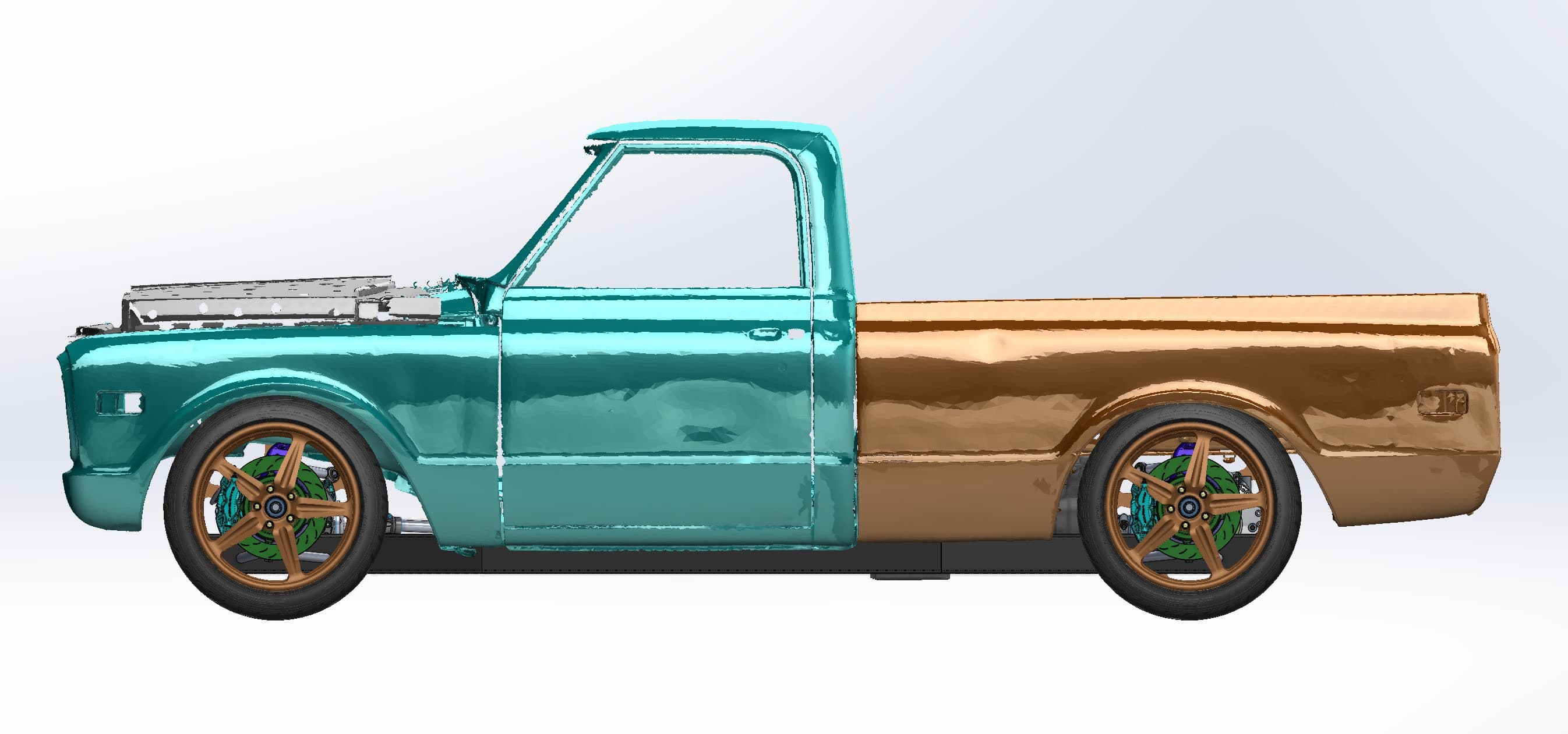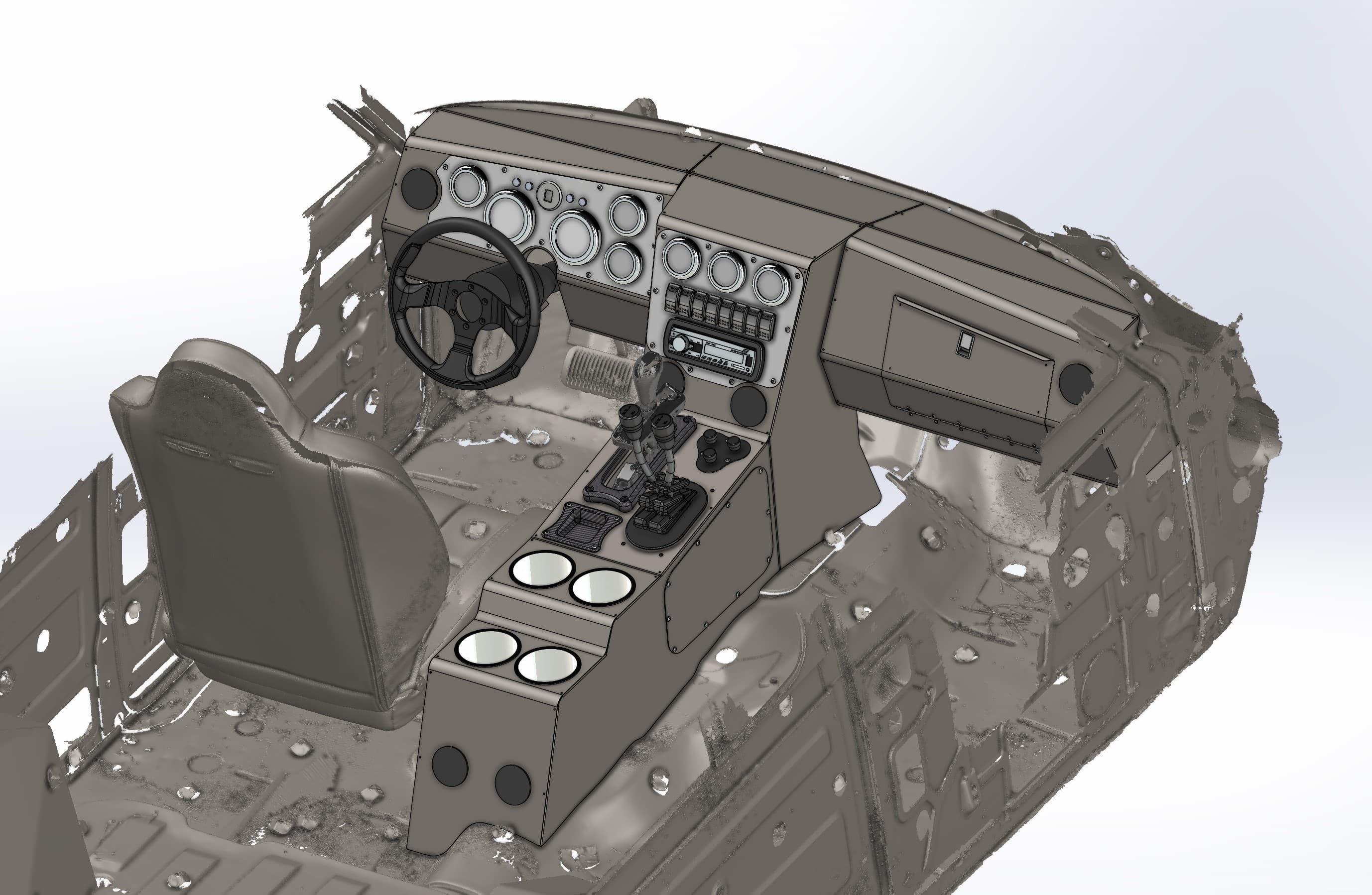
A custom interior has to fit a cab that may not match any drawing. The dash has to meet the firewall, cowl and door openings, and the console has to clear the shifters and the seats while staying within reach of the driver. For this vintage 4x4, we 3D scanned the stripped cab and designed a new full-width dash and center console in CAD, inside the scan. Every panel was laid out against the real cab rather than against measurements taken with a tape.
What we scanned
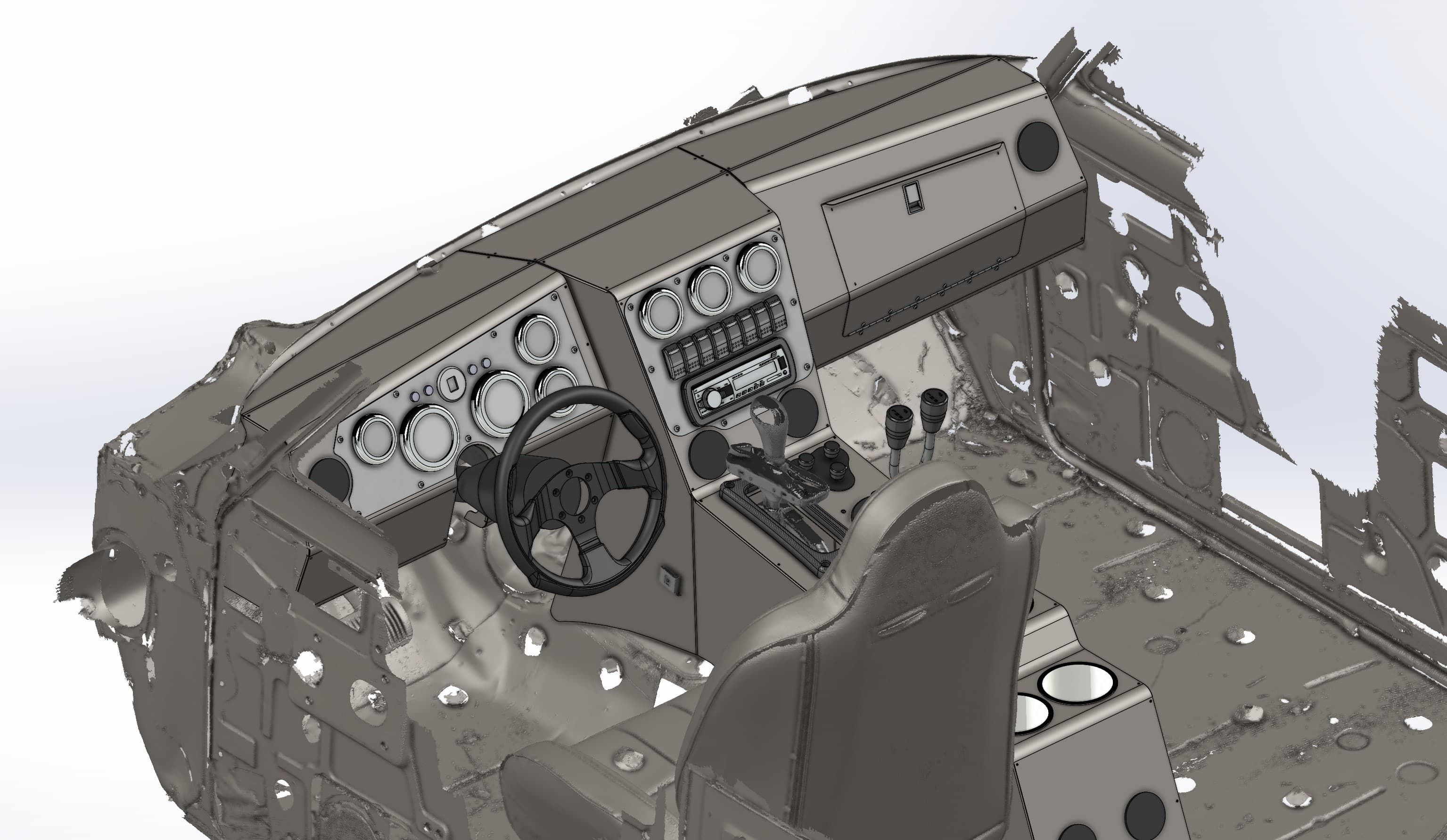
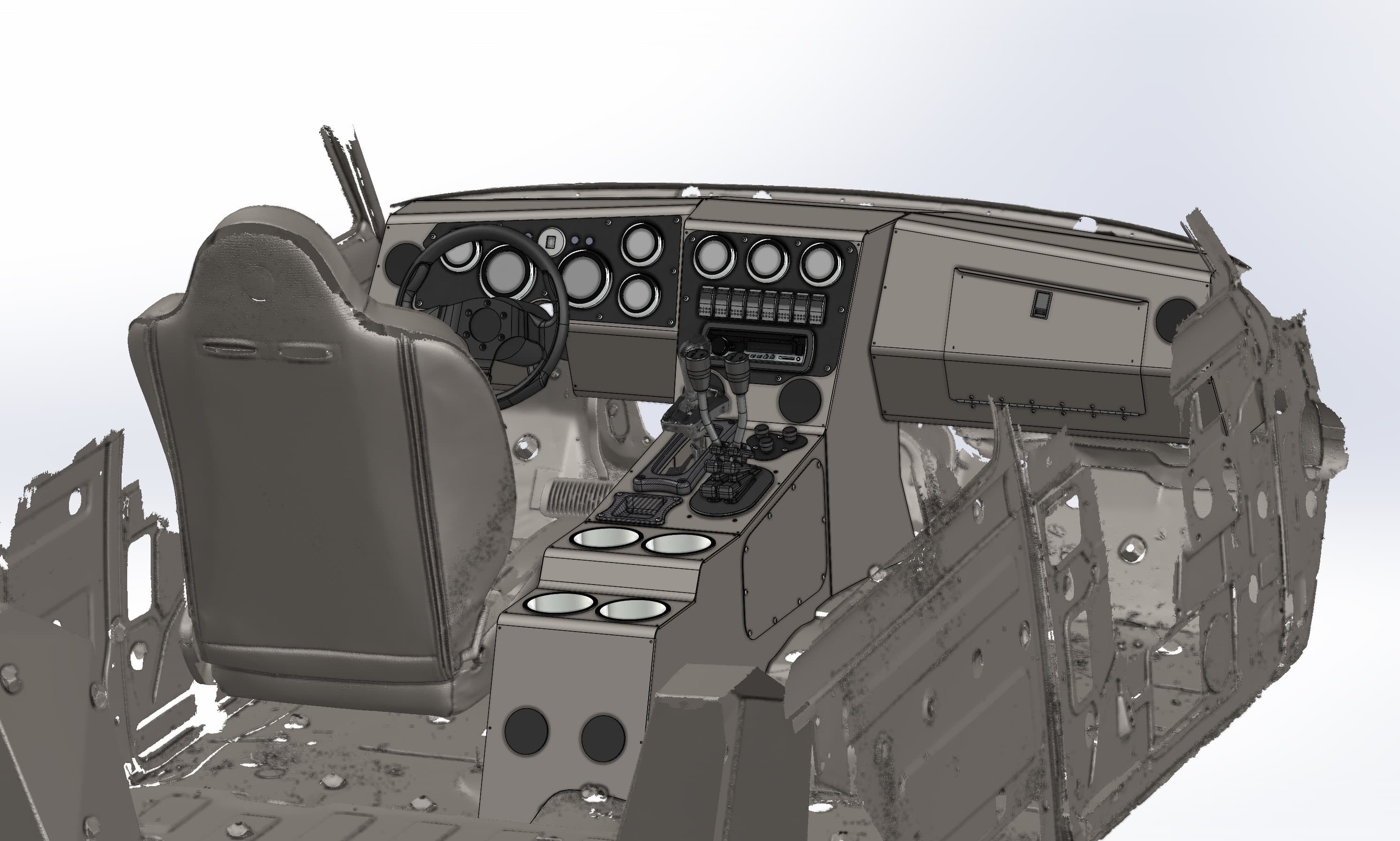
With the interior out, the cab was down to its bones: floor, firewall and door openings. We scanned all of it, along with a bucket seat, so the seat position was in the model too. In the renders, the ragged-edged mesh of the floor, firewall and door openings is scan data. The dash and console are the new design.
Scanning a stripped cab captures surfaces that are hard to measure any other way: the curve of the firewall, the floor's stampings and the shape of the door openings. Those are the surfaces a dash and console have to meet.
Designing the dash and console
The new interior was designed to fit inside the scanned shell:
- A full-width dash with large analog gauges in front of the driver
- A rocker-switch panel and a radio head unit in the center stack
- A glovebox on the passenger side
- A center console with four cupholders
- Room in the console for the gear shifter and twin transfer-case levers
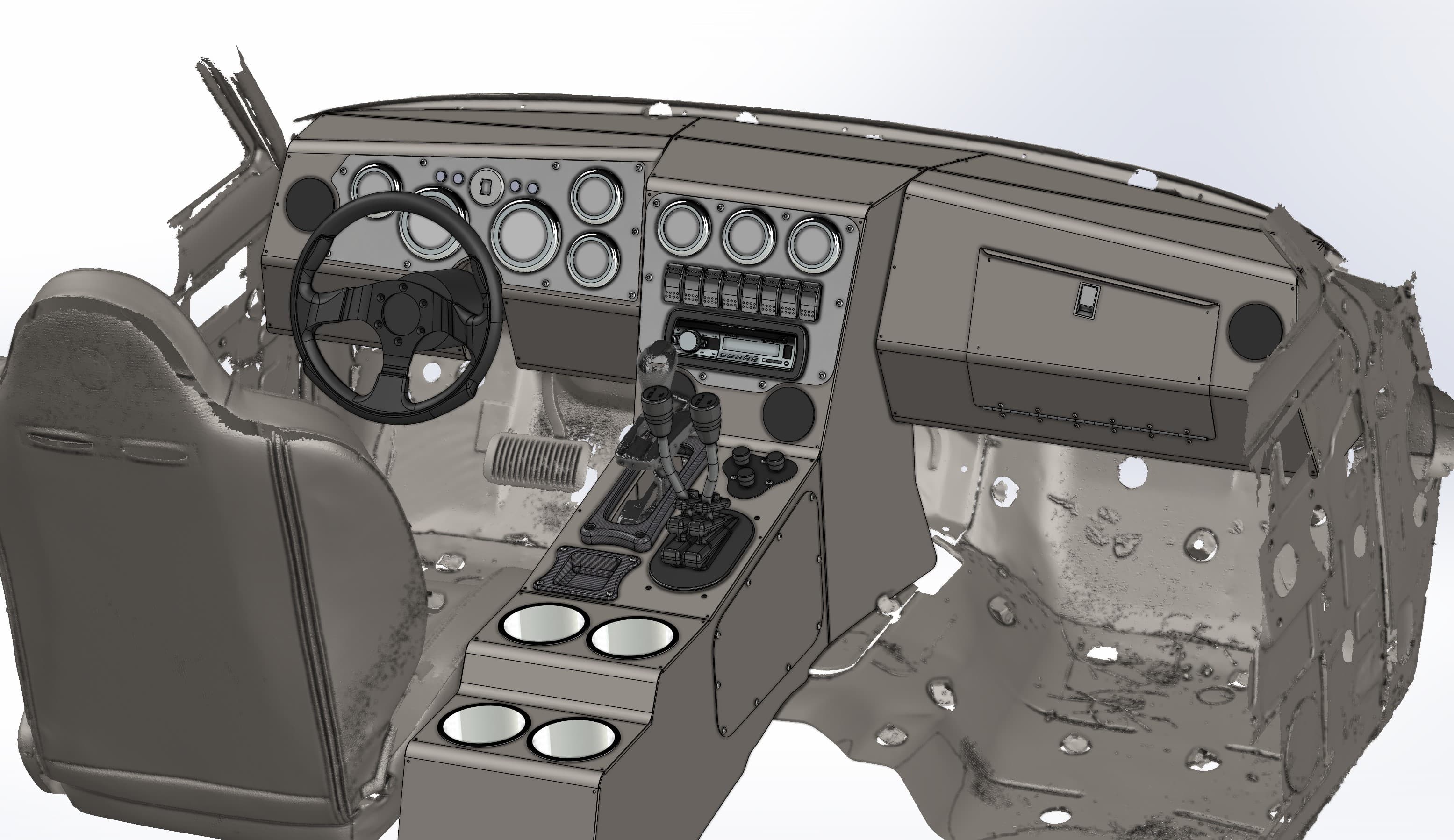
Because the scanned seat is in the model, the layout can be judged from the driver's point of view. You can see where the gauges sit relative to the steering wheel, how the console lines up between the seats and whether the cupholders and levers land where a hand would reach for them.
Why design an interior inside a scan
Interior parts are where small errors show. A dash that's off at the firewall leaves a gap you see every time you get in. A console that crowds the shifter gets in the way every time you drive. Designing against a scan puts the real cab in the CAD model, so fit questions get answered on screen, not with cardboard templates and trial cuts.
It also gives the design a clean path to manufacturing. Panels designed in SolidWorks against the scan can go out as STEP, Parasolid (X_T) or IGES files for cutting, bending or printing. The scan itself stays available as an STL mesh for anyone building around the same cab.
What the customer got
- A scan mesh of the stripped cab and seat
- Dash and center console CAD models built to fit the scan
- Renders for reviewing the layout from several angles
Planning a custom interior?
Restomods, overland builds and vintage 4x4s all hit the same wall: the old cab doesn't match any drawing, and the new parts have to fit it anyway. Scan the cab first and design inside it.
Learn how our reverse engineering and scan-to-CAD service works, see more automotive 3D scanning projects, and check how to prepare for 3D scanning before your cab comes in. When you're ready, get an instant estimate.