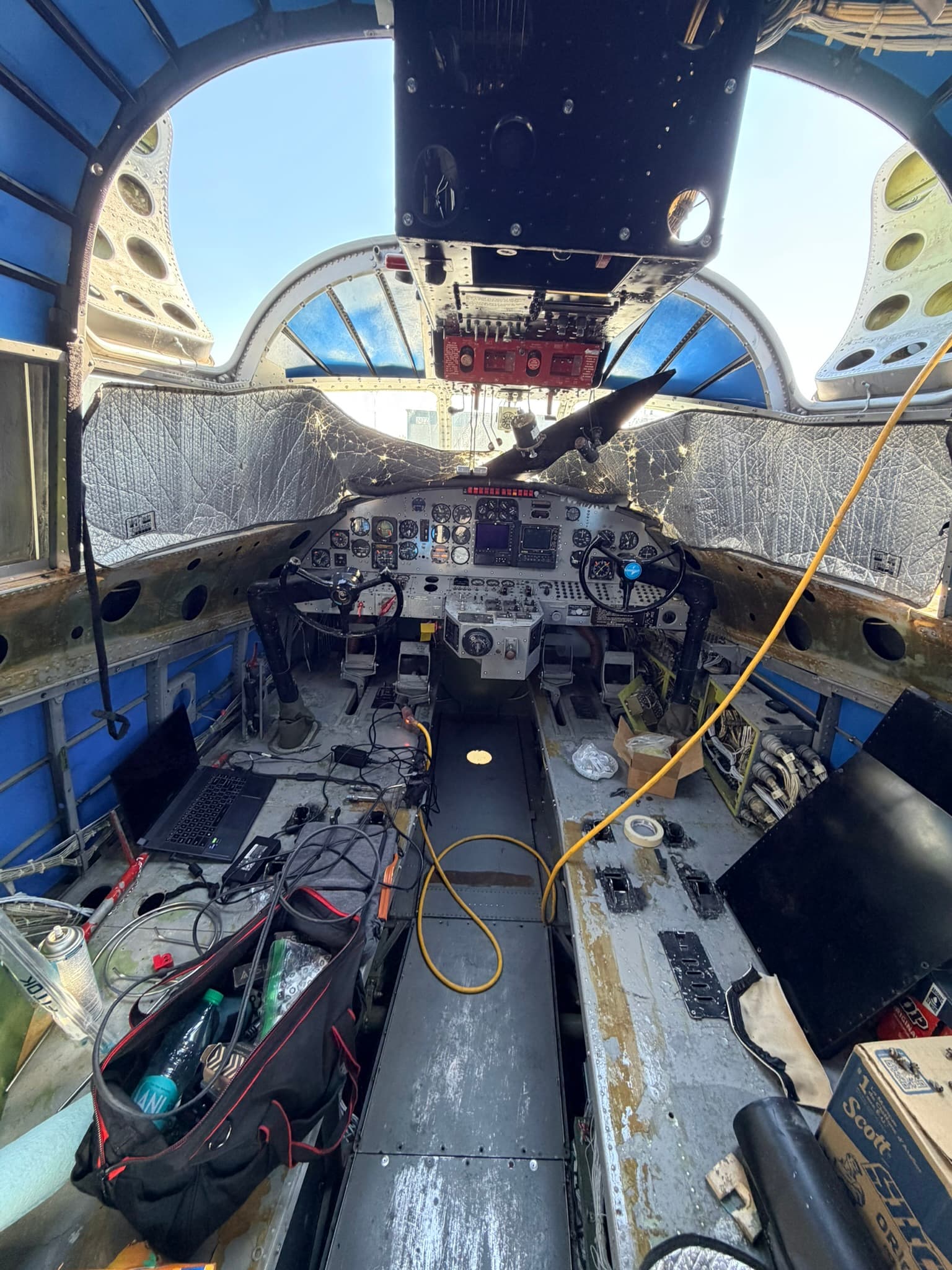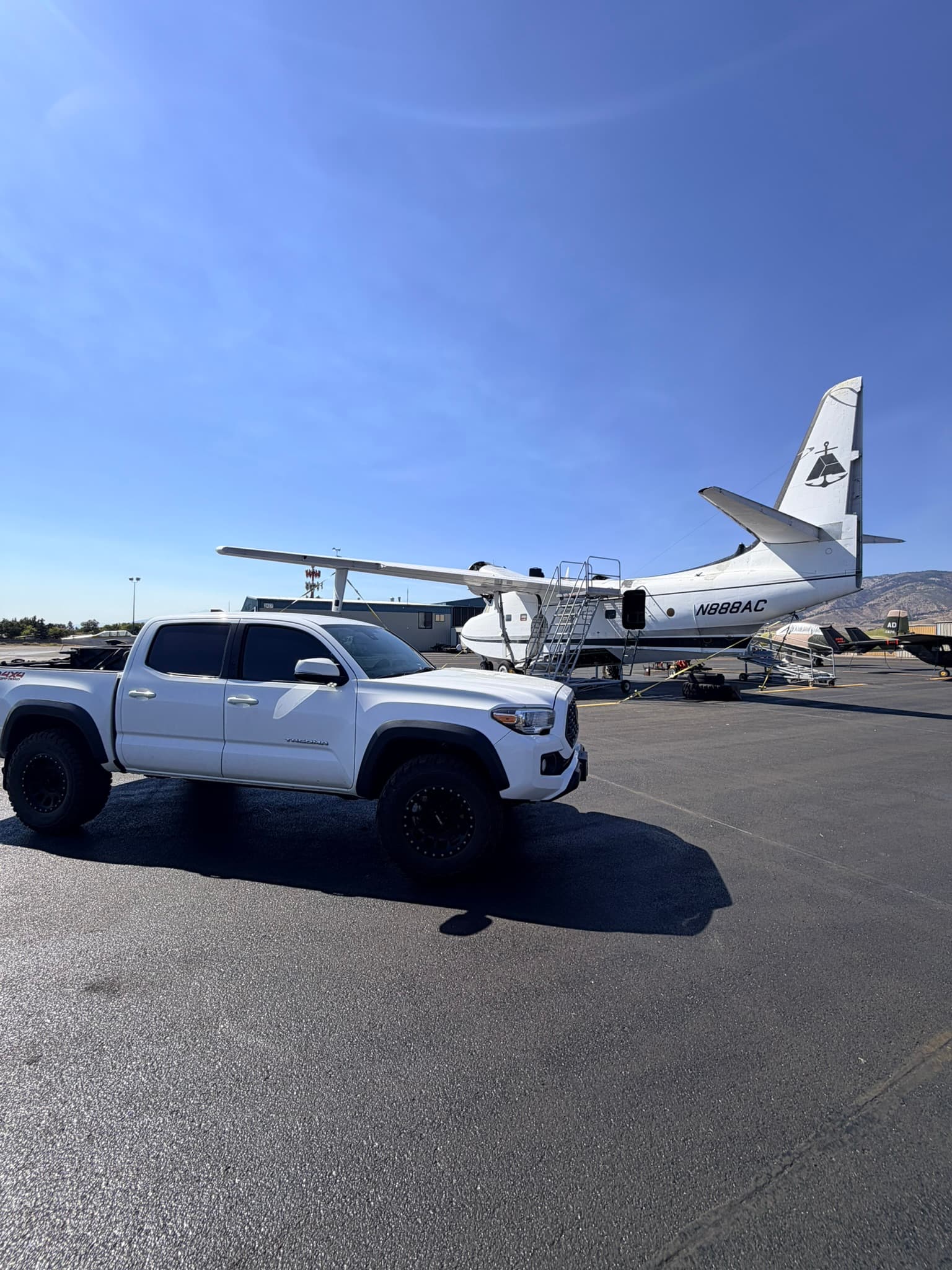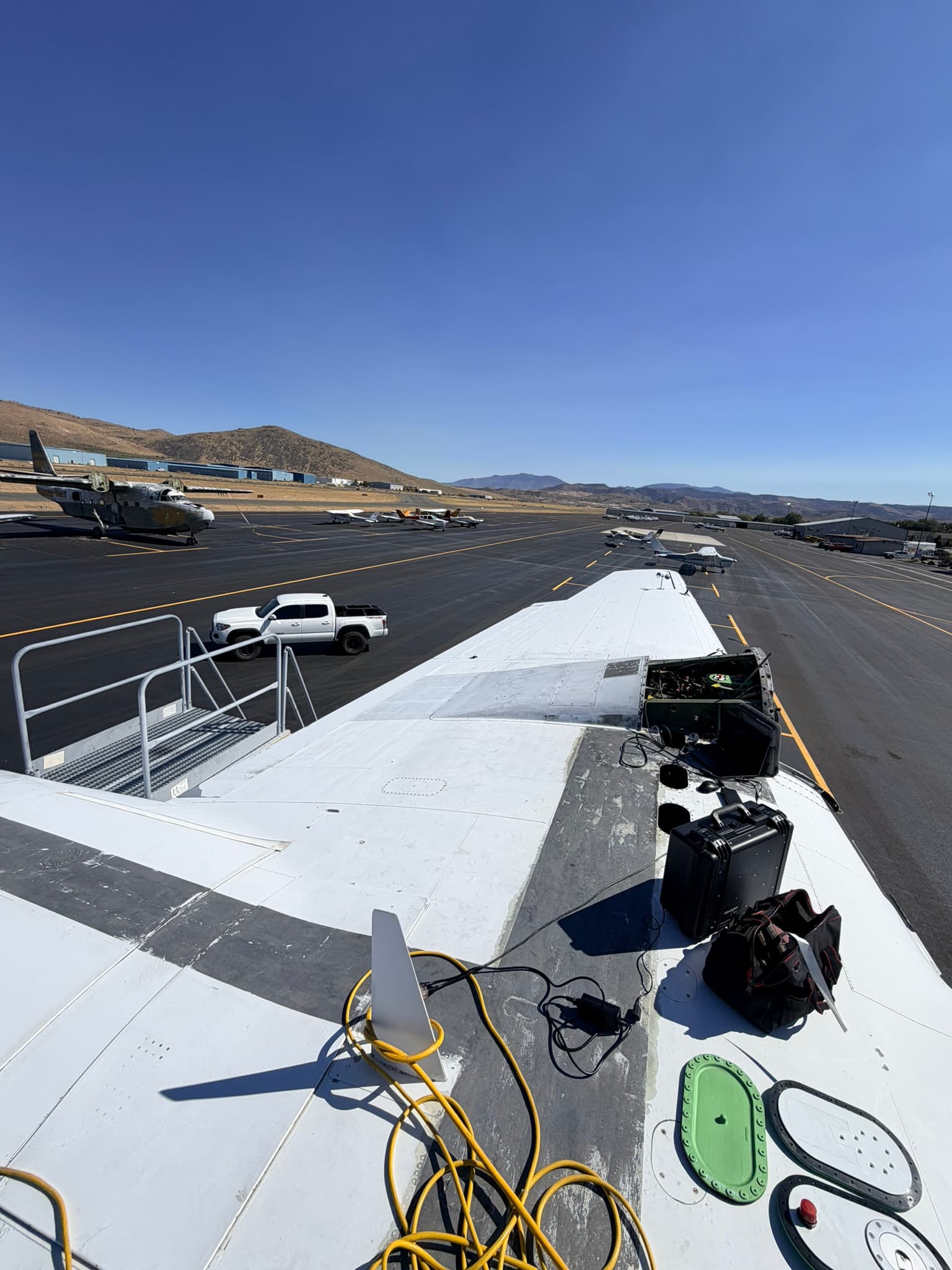
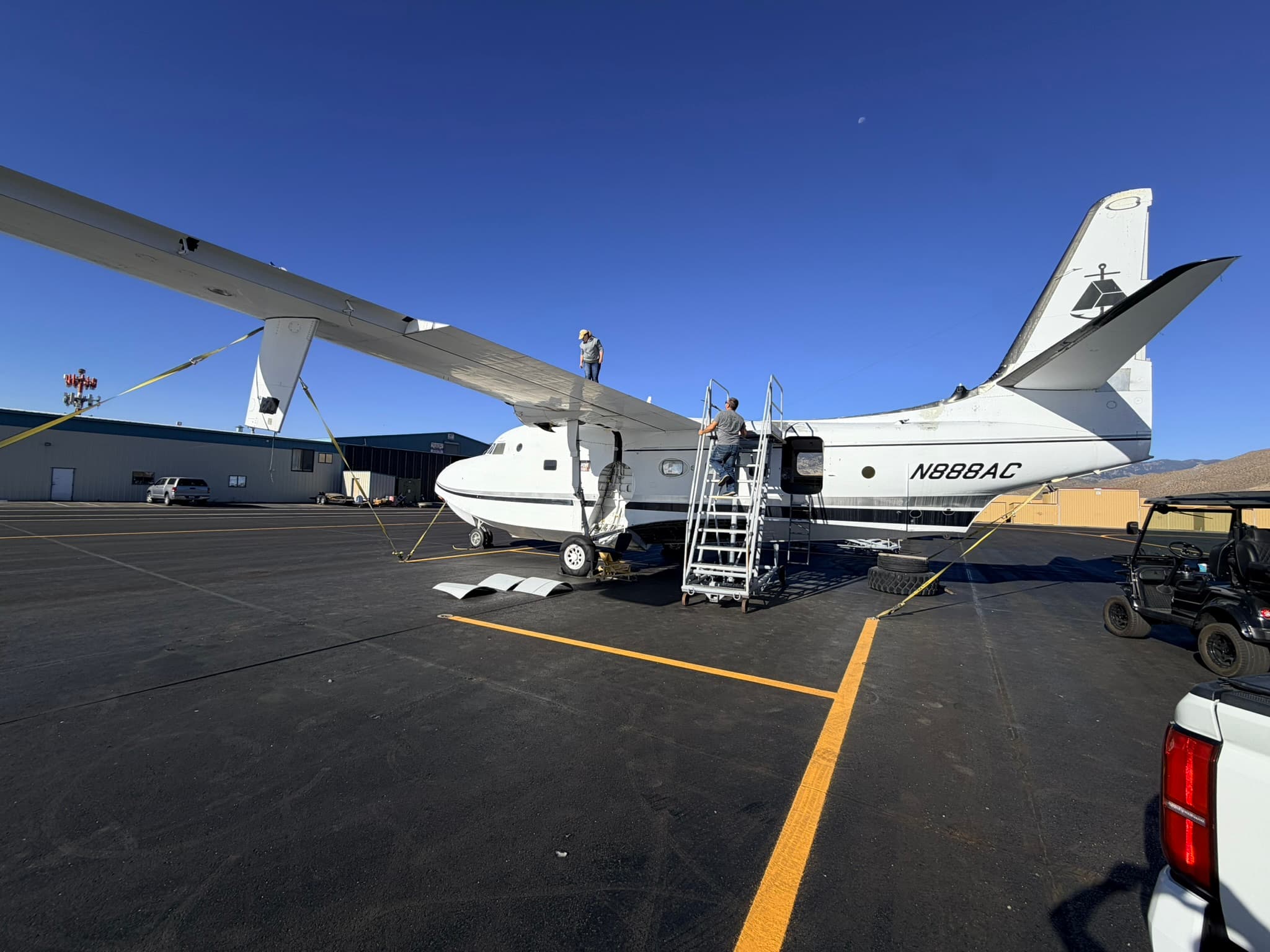
This aircraft didn't come to us. A vintage amphibian was tied down on an airport ramp with its cabin stripped back to structure, so we took the scanning kit to the airplane: equipment cases up on the wing, a laptop on the cabin floor and a handheld blue-laser scanner in the cockpit. This aircraft cockpit 3D scan captured the instrument panel, center pedestal and controls as a mesh for the customer's engineering work, without the airplane going anywhere.
The aircraft and the timing
The airframe is a high-wing amphibian with a boat hull, and its cabin was stripped for work when we arrived. The floor and sidewalls were bare structure. The instrument panel, with its round gauges and newer avionics screens, the twin yokes, the overhead switch panel and the center pedestal were all still in place.
That's a good moment to scan. With the interior out, nothing hides the structure around the panel, and the cockpit can be captured as it really is before new parts go in.
Scanning the cockpit on the ramp
We staged the equipment cases on top of the wing, ran power in, and set the laptop up on the cabin floor. Small reflective target dots went on the panel to give the scanner reference points. Then the handheld scanner swept across the center pedestal, yokes and gauges while the mesh built on screen in real time.
Watching the live mesh matters on site. If an area is thin or missing, we see it while the scanner is still in hand, not after we've packed up and left the airport.
What the customer gets
The result is a scan mesh of the cockpit, instrument panel and center pedestal, exported in standard formats such as STL, OBJ or PLY. It's the as-scanned record of the cockpit, and it gives designers the real space to work in. When a team needs modeled features, we can turn the mesh into CAD in STEP, Parasolid (X_T) or IGES.
Why ramp-side cockpit scanning works
Cockpits are full of compound curves, tight spaces and parts that can't easily come out. A handheld scanner gets into those spaces, which is why panel layouts, avionics installs and interior restoration are common reasons to scan a cockpit. And because the scanner comes to the airplane, nothing has to be ferried or trucked anywhere.
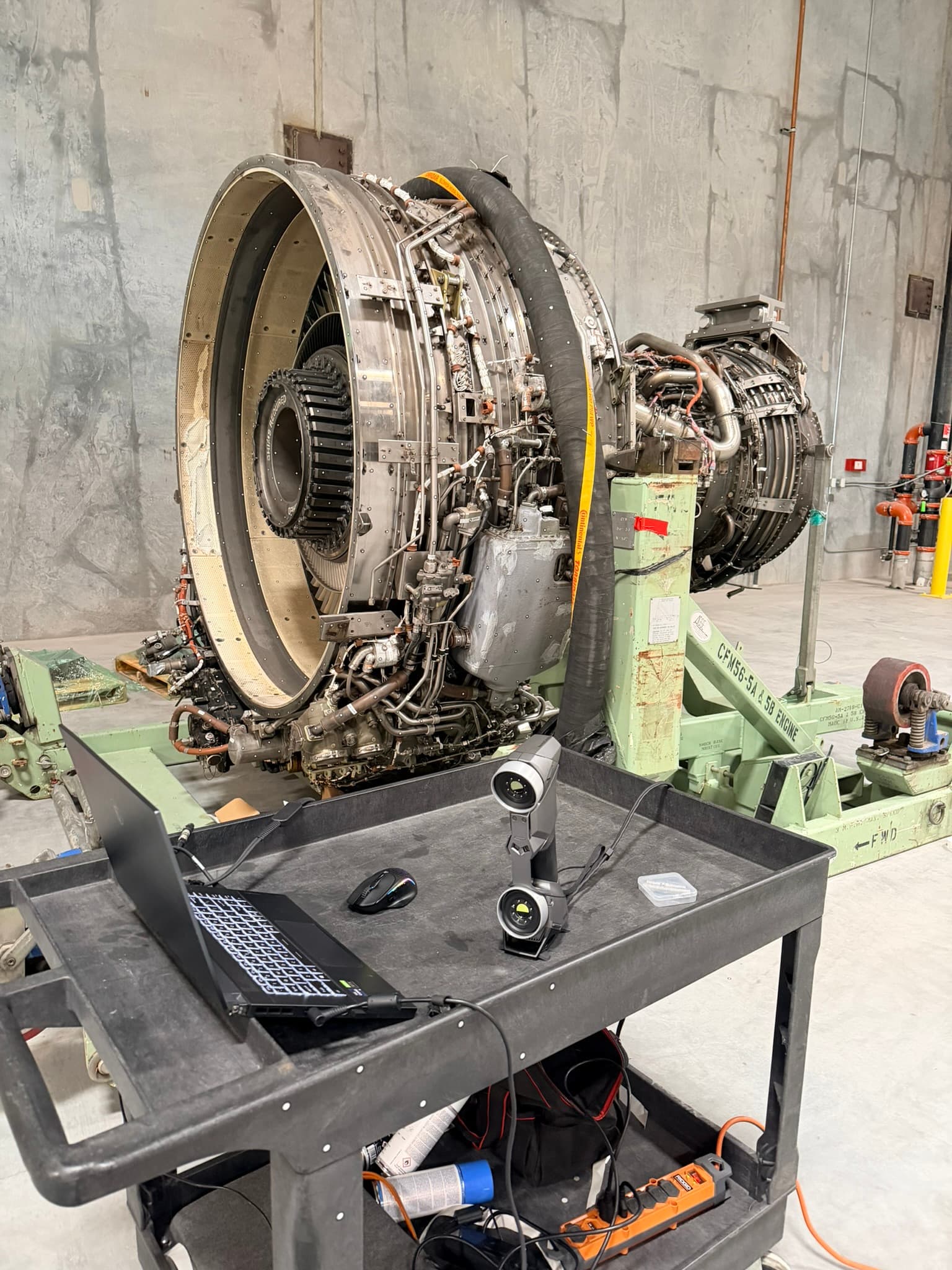
We're based in Reno, Nevada and travel anywhere in the US. Read how on-site 3D scanning works at a hangar or ramp, see our aerospace and aviation scanning page, or look at another on-site aviation job, our CFM56-series jet engine scan. To price your aircraft, get an instant estimate.